Your cart is currently empty!
Category: Waveform Generator
-

MEMs characterization 101: Everything you need to know
Everywhere you look, it’s obvious: Devices today are getting smaller. What you may not realize is how small they’re truly becoming. Enter microelectromechanical systems (MEMS). MEMS are tiny devices or systems with both electrical and mechanical components. These systems range from a few micrometers to a few millimeters in size. At these scales, there is…
-

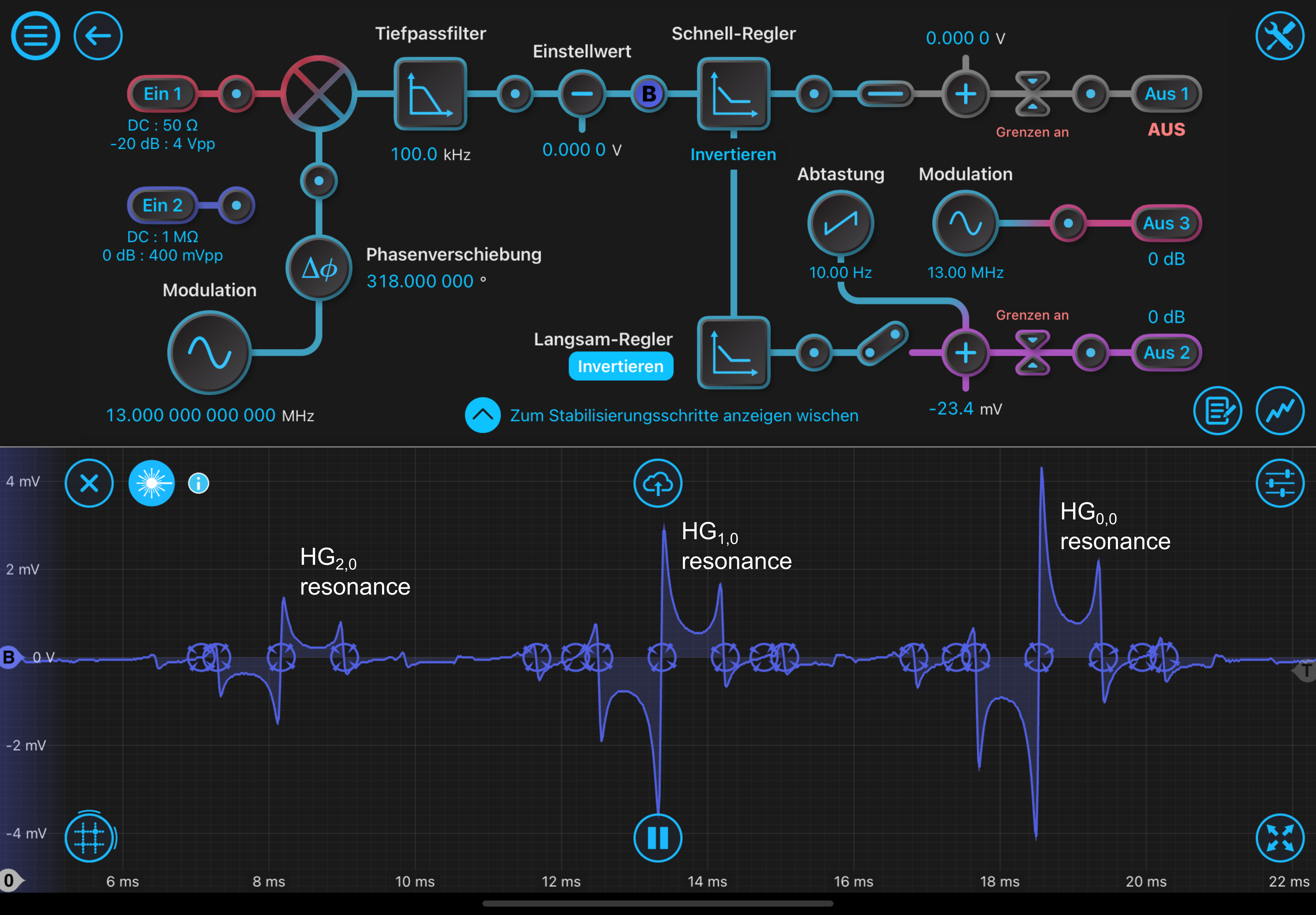
Resonator length stabilization with the Moku:Pro Laser Lock Box at the University of Münster
Introduction At the University of Münster, a top educational institution in Germany that offers degree programs in more than 120 fields, Ph.D. student Michael Zwilich is working hard to characterize beams with different spatial profiles. Instead of suppressing the higher-order transverse modes, much like in typical gravitational wave detection methods with a single-frequency Gaussian beam,…
-

Search and destroy: Preparing Bloodsport for combat with Moku:Go
Introduction Bloodsport is a heavyweight combat robot designed for equal parts destruction and entertainment. The fierce robot, a competitor on season seven of the Discovery Channel’s popular show BattleBots, has a 46 in (117 cm) spinning arm designed to inflict maximum damage to rival robots. Bloodsport (Figure 1) weighs in at a whopping 250 lb…
-

Automating the future at Oregon State University Ecampus with Moku:Go
Introduction Oregon State University (OSU), Oregon’s largest public university, offers a 100% online degree program called OSU Ecampus. This top-ranked provider of online education is growing rapidly, welcoming more students and increasing the variety of degrees offered. In Automating the Future (ENG 100), an introductory, fully online engineering course for students across science, technology, engineering,…
-

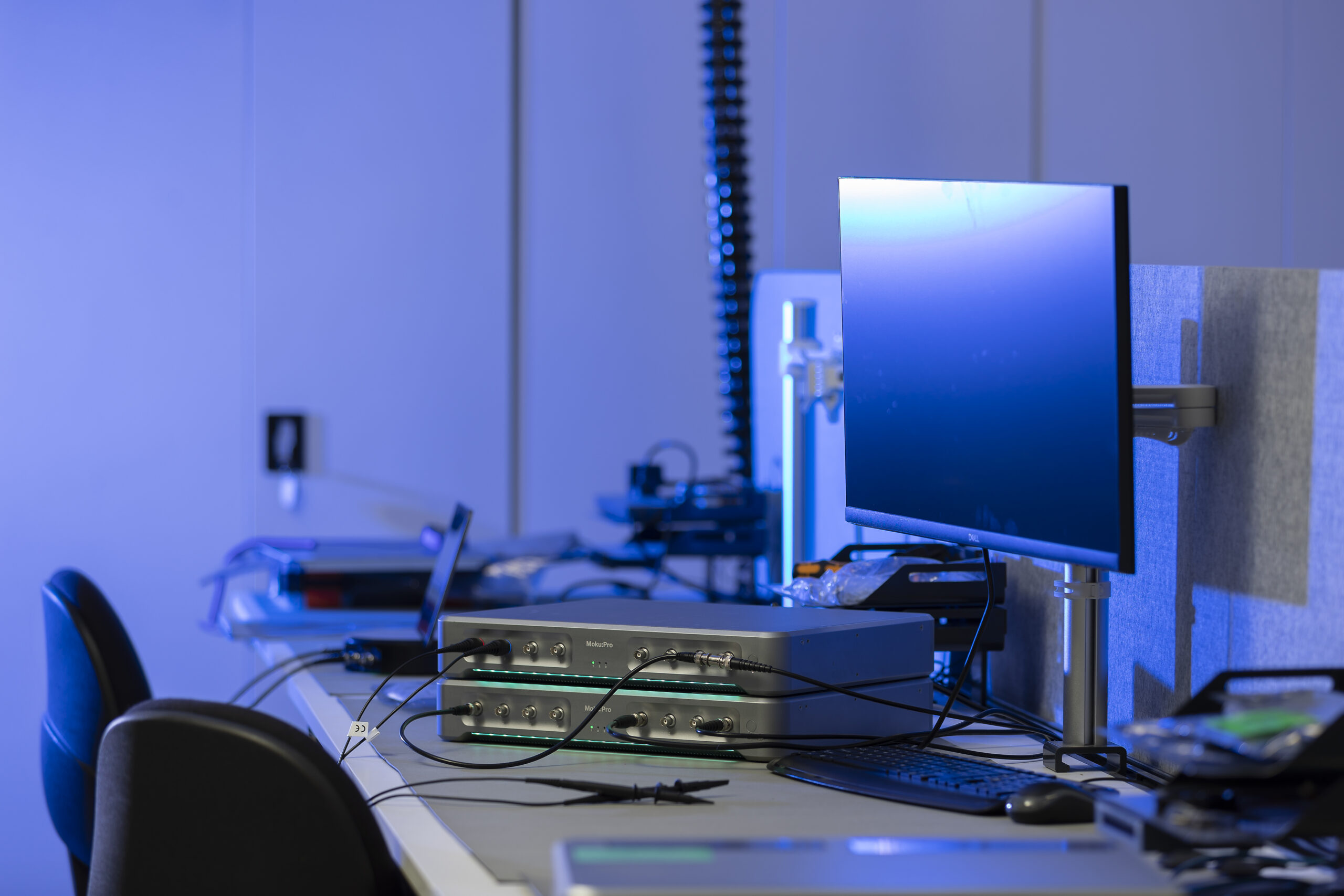
Leveraging Moku:Pro in a space-constrained optical lab
Introduction At Chapman University, Dr. Mark Harrison and his research group are designing integrated photonic logic components for digital information processing and optical computing. With limited space and difficult-to-access equipment, efficiency and workflow of the optics and photonics lab are essential. Using Moku:Pro, they have been able to reduce their equipment footprint and cabling clutter,…
-
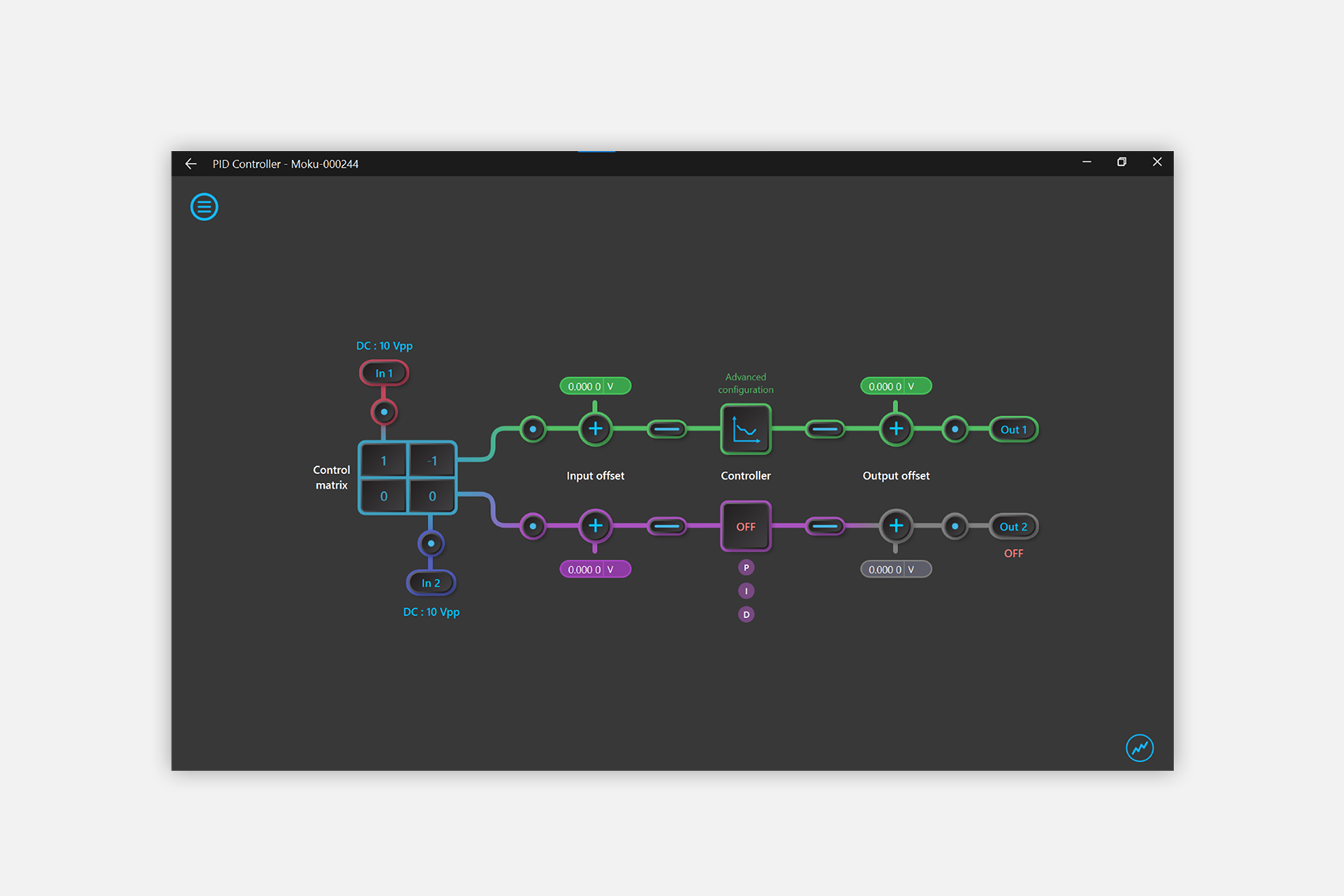
Open Loop Tuning lab using Moku:Go’s PID Controller
Moku:Go combines 10+ lab instruments in one high performance device. This application note uses Moku:Go’s PID Controller, Oscilloscope, and Programmable Power Supplies to provide a visually engaging way of learning various tuning methods for PID controllers. Moku:Go Moku:Go combines 10+ lab instruments in one high performance device, with 2 analog inputs, 2 analog outputs,…
-
Overview of Butterworth filter lab
Moku:Go combines 10+ lab instruments in one high-performance device. This application note discusses a typical undergraduate electronics lab exercise and how it can be effectively conducted using Moku:Go and its Windows or macOS app. Moku:Go’s programmable power supplies power the integrated circuit and the analog inputs and outputs can stimulate and characterize the circuit behavior.…