Your cart is currently empty!
Category: Coursework
-

Sampling Theorem
Signal digitization is an essential step to enable digital signal processing (DSP). It converts an analog signal to discrete-time binary numbers and allows the signal to be processed with digital logic devices, such as CPUs, application-specific integrated circuits (ASIC), and field-programmable gate arrays (FPGA). To ensure the conversion process retains the maximum signal fidelity, the…
-
Bit Growth via Oversampling
Bit resolution and sampling rate are two of the most important characteristics of an analog-to-digital converter (ADC). With a higher bit resolution, the input signal can be digitized with a higher resolution and lower quantization noise. Therefore, it helps improve the overall outcome of the entire digital signal processing (DSP) workflow. Most ADCs are designed…
-
Moku:Go’s Arbitrary Waveform Generator
Arbitrary waveform generators are used to output specific stimulus signals for a device under test, such as detectors and communication devices. In this application note, we provide a tutorial on using Moku:Go’s Arbitrary Waveform Generator with MATLAB to generate two arbitrary waveforms with pulse and burst modulation. The MATLAB script and text file accompanying this…
-
Moku:Go’s I-V Curve Tracing
Moku:Go combines 10+ lab instruments in one high-performance device. This application note uses Moku:Go’s Oscilloscope and its integrated waveform generator to investigate the forward bias behavior of a diode. Moku:Go Moku:Go combines 10+ lab instruments in one high performance device, with 2 analog inputs, 2 analog outputs, 16 digital I/O pins and optional integrated power…
-
Overview of Butterworth filter lab
Moku:Go combines 10+ lab instruments in one high-performance device. This application note discusses a typical undergraduate electronics lab exercise and how it can be effectively conducted using Moku:Go and its Windows or macOS app. Moku:Go’s programmable power supplies power the integrated circuit and the analog inputs and outputs can stimulate and characterize the circuit behavior.…
-
Moku:Go’s Spectrum Analyzer
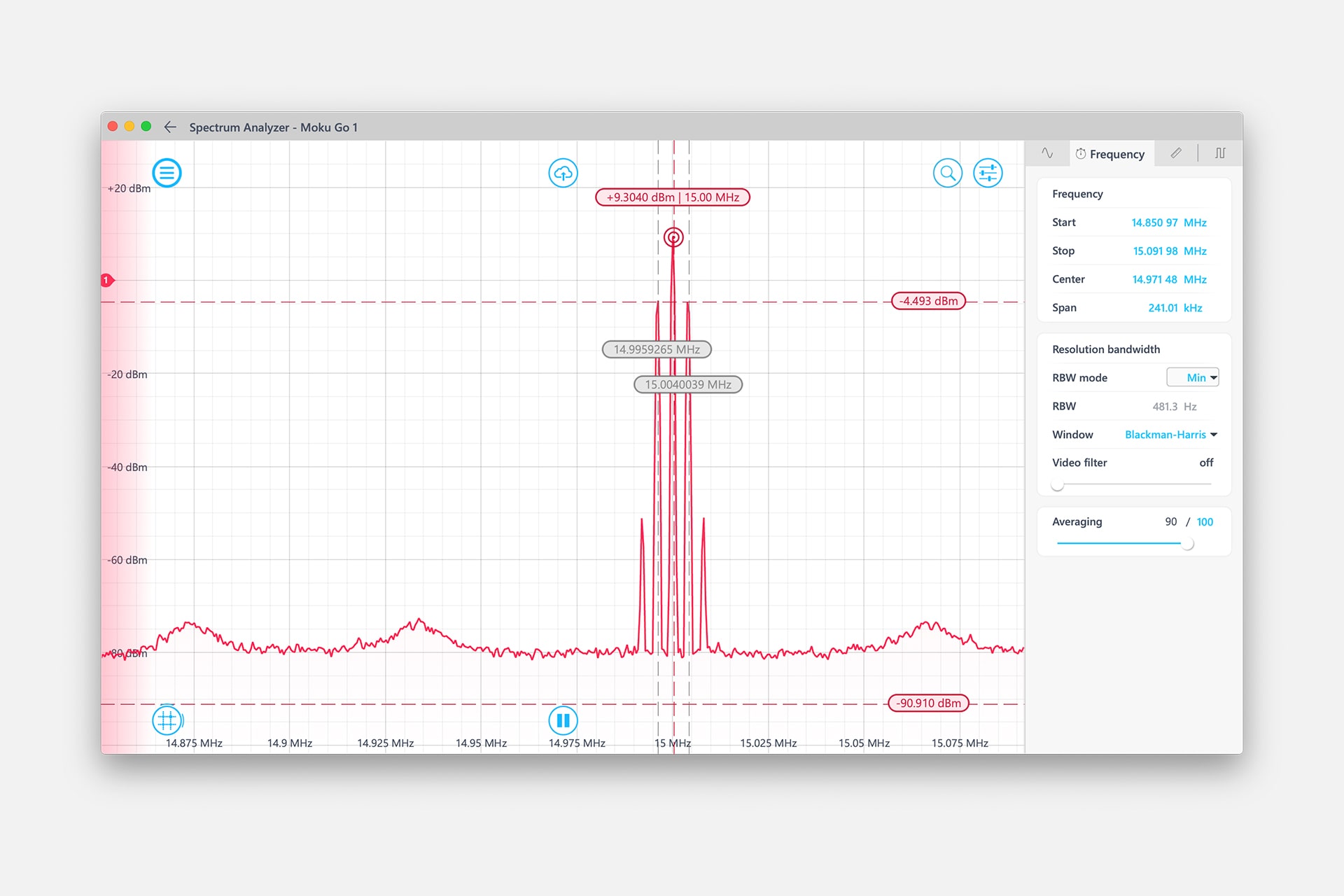
Moku:Go combines 10+ lab instruments in one high-performance device. This application note discusses Moku:Go’s Spectrum Analyzer and Waveform Generator and the advantages of a hybrid, swept signal spectrum analyzer. Moku:Go Moku:Go combines 10+ lab instruments in one high performance device complete with integrated power supplies. In this application note, we discuss the benefits of a…
-
Moku hardware and remote labs
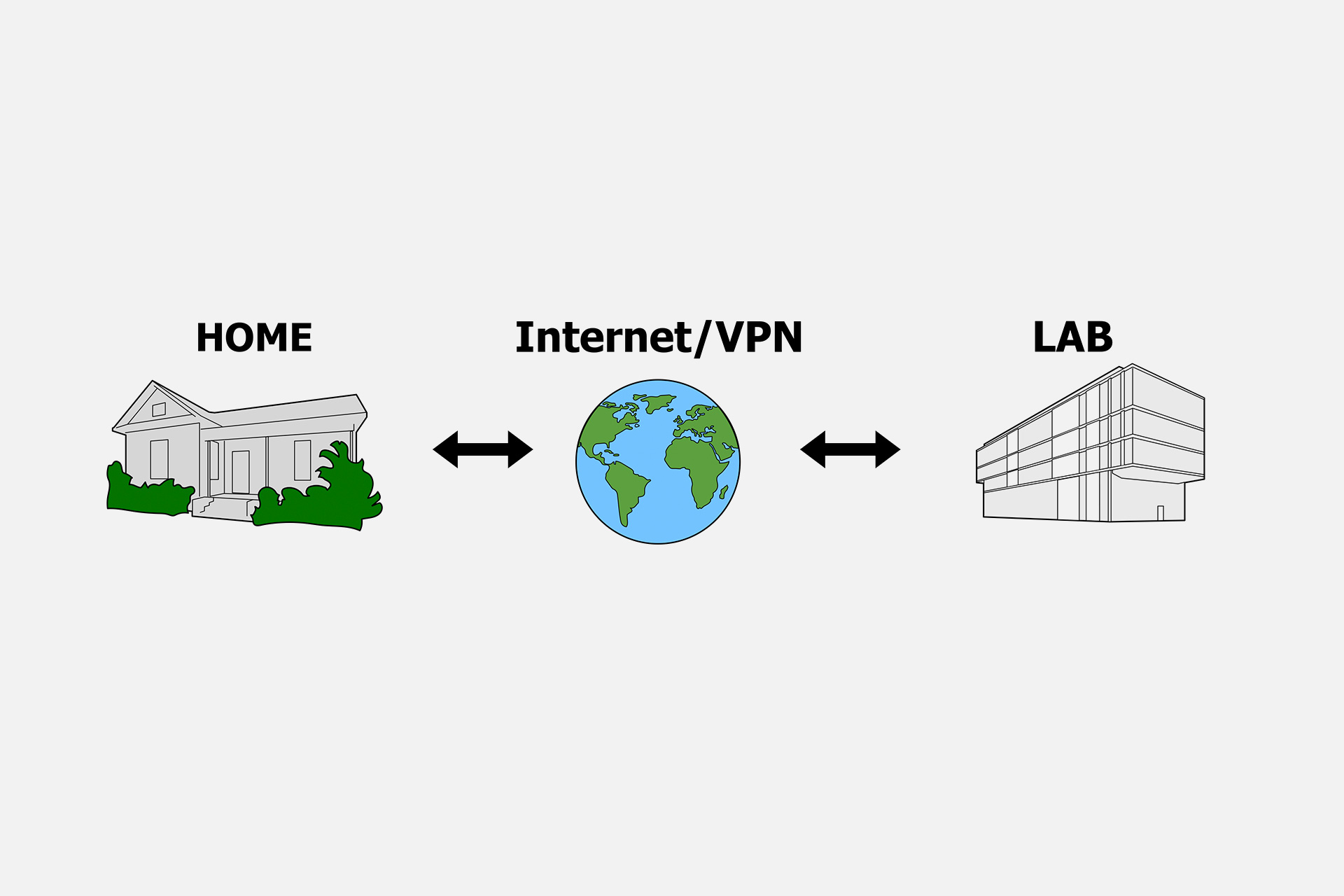
Moku:Go combines 8 lab instruments in one high-performance device with Windows and macOS apps. This application note discusses the real-world deployment of Moku hardware in an undergraduate teaching laboratory and the resulting benefits to students. Moku:Go Moku:Go combines 8 lab instruments in one high-performance device complete with integrated power supplies on M1 and M2 models.…
-
-
Texas A&M Students Independently Review Moku:Lab
Jefferson Pham, Alexa Woppman, Dr. Joseph Morgan, Professor Matthew Leonard Texas A&M University Electronic Systems Engineering Technology (ESET) Multidisciplinary Engineering Technology (MET) Overview During the height of COVID-19, Moku:Lab was shipped to two Texas A&M students for them to work with and evaluate. Working with the Oscilloscope, Waveform Generator, Frequency Response Analyzer, and Spectrum Analyzer,…