Your cart is currently empty!
Category: Case studies
-

Easily locking lasers to a high-finesse cavity with Moku:Pro
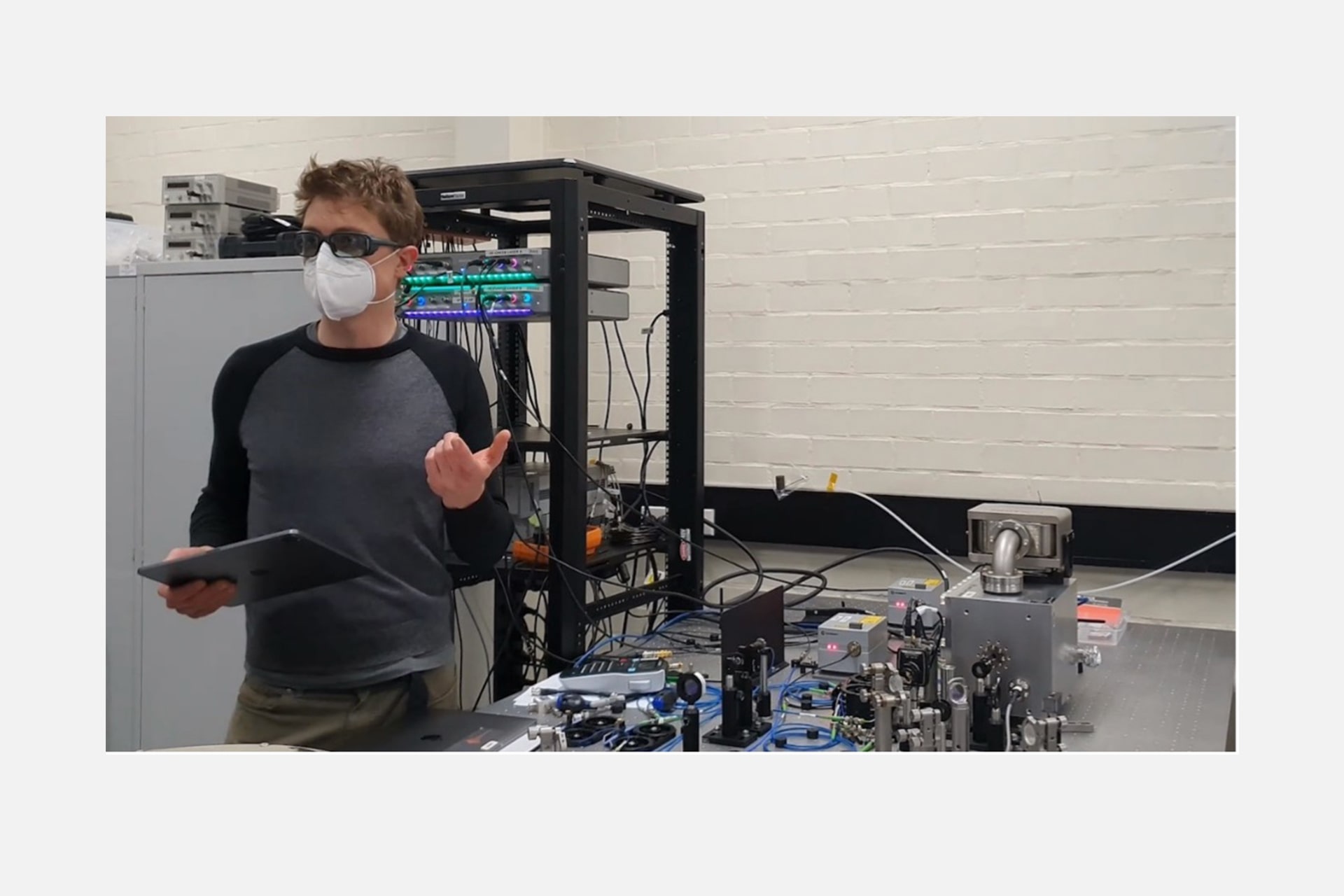
Summary At the Centre for Gravitational Astrophysics/OzGrav at the Australian National University, Dr. Andrew Wade and team are developing ultra-stable frequency reference sources for use in long-range, high-precision laser sensing projects. Moku:Pro’s Laser Lock Box and its FPGA-based digital implementation enables them to easily acquire lock and tune parameters for a more accessible, robust solution…
-
Advancing the search for dark matter with Moku:Lab
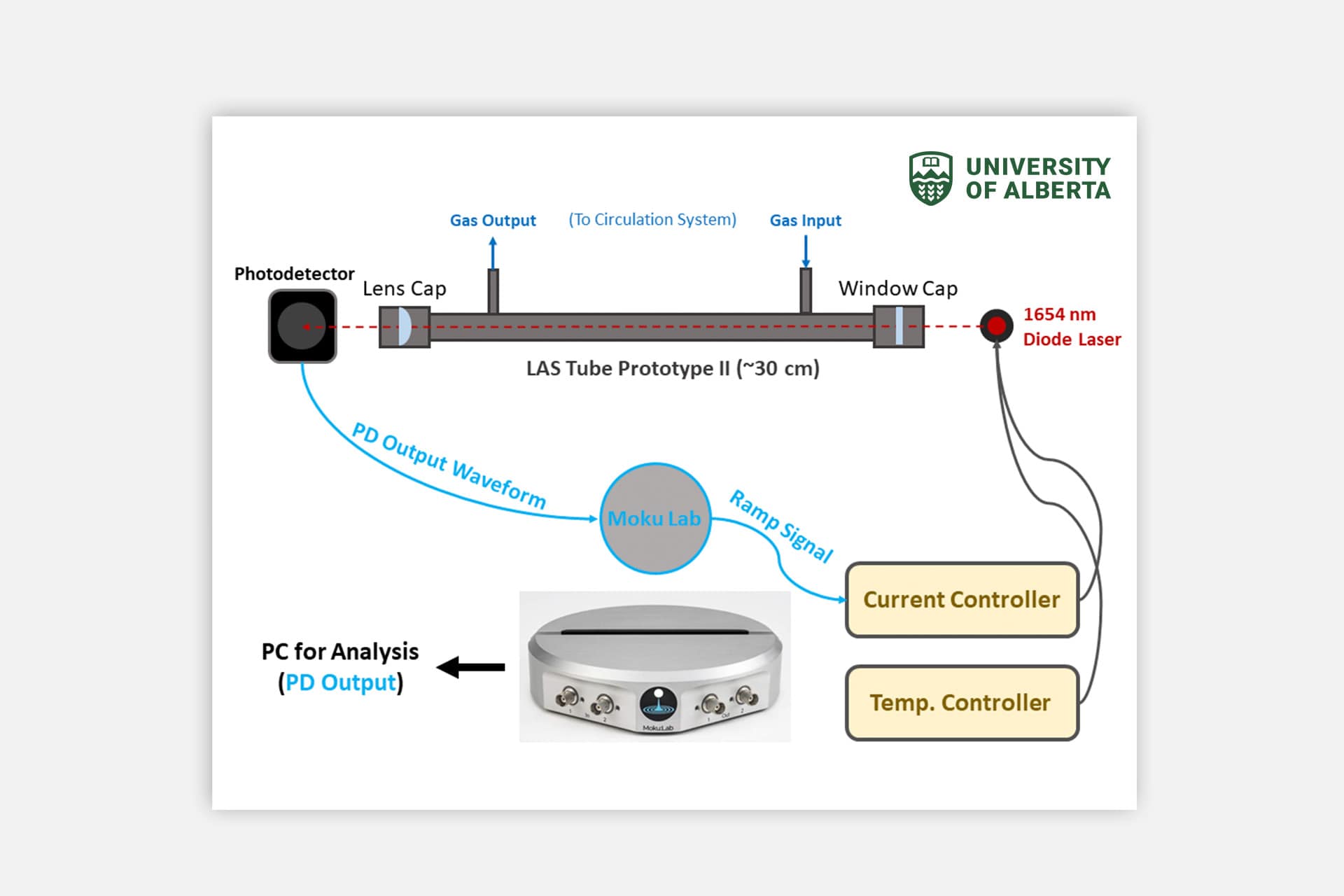
Introduction At the University of Alberta, researchers are working to develop ultra-sensitive devices to improve dark matter detector technologies. This requires high-precision measurements, initially as a prototype in the lab and ultimately as an online monitoring system to be installed at 2km underground. Moku:Lab’s compact form factor and versatility enable researchers to perform experiments in…
-
Simplifying two-color stimulated Raman scattering microscopy experiments with Moku:Pro
Introduction At the University of Washington, researchers working on chemical imaging tools for applications like early cancer detection and understanding neurodegenerative disease progression use two-color stimulated Raman scattering (SRS) microscopy. Experiment setups typically include multiple, complex, high-performance instruments for real-time two-color SRS imaging or simultaneous imaging of two widely spaced Raman transitions. Using the Moku:Pro…
-
Leveraging Moku:Pro in a space-constrained optical lab
Introduction At Chapman University, Dr. Mark Harrison and his research group are designing integrated photonic logic components for digital information processing and optical computing. With limited space and difficult-to-access equipment, efficiency and workflow of the optics and photonics lab are essential. Using Moku:Pro, they have been able to reduce their equipment footprint and cabling clutter,…
-

Liquid Instruments’ “Moku” transforms into multiple advanced scientific instruments with Xilinx’s adaptive SoCs
This Case Study was written by Xilinx and originally appeared on their website under Powered by Xilinx [xyz-ihs snippet=”CaseStudy-Liquid-Instruments-Moku-Transforms”] At a glance: Liquid Instruments was founded by a team of experimental physicists and engineers with expertise in precision measurement and gravitational wave detector instrumentation. The company provides technology that helps scientists, engineers, students, and professionals…
-
Moku hardware and remote labs
Moku:Go combines 8 lab instruments in one high-performance device with Windows and macOS apps. This application note discusses the real-world deployment of Moku hardware in an undergraduate teaching laboratory and the resulting benefits to students. Moku:Go Moku:Go combines 8 lab instruments in one high-performance device complete with integrated power supplies on M1 and M2 models.…
-

The Experiment Must Go On — Using Moku:Lab During Lockdown
At the onset of COVID-19 pandemic, Dr. Andrew Wade and Dr. Kirk McKenzie of the Center for Gravitational Astrophysics at the Australia National University (ANU) were warned that a full shutdown of their lab was imminent, and could last for months. They needed to quickly configure their setup and ensure long-term data collection was possible.…
-
Texas A&M Students Independently Review Moku:Lab
Jefferson Pham, Alexa Woppman, Dr. Joseph Morgan, Professor Matthew Leonard Texas A&M University Electronic Systems Engineering Technology (ESET) Multidisciplinary Engineering Technology (MET) Overview During the height of COVID-19, Moku:Lab was shipped to two Texas A&M students for them to work with and evaluate. Working with the Oscilloscope, Waveform Generator, Frequency Response Analyzer, and Spectrum Analyzer,…
-