Your cart is currently empty!
Category: Application notes
-

Bit Growth via Oversampling
Bit resolution and sampling rate are two of the most important characteristics of an analog-to-digital converter (ADC). With a higher bit resolution, the input signal can be digitized with a higher resolution and lower quantization noise. Therefore, it helps improve the overall outcome of the entire digital signal processing (DSP) workflow. Most ADCs are designed…
-
Moku:Go’s Arbitrary Waveform Generator
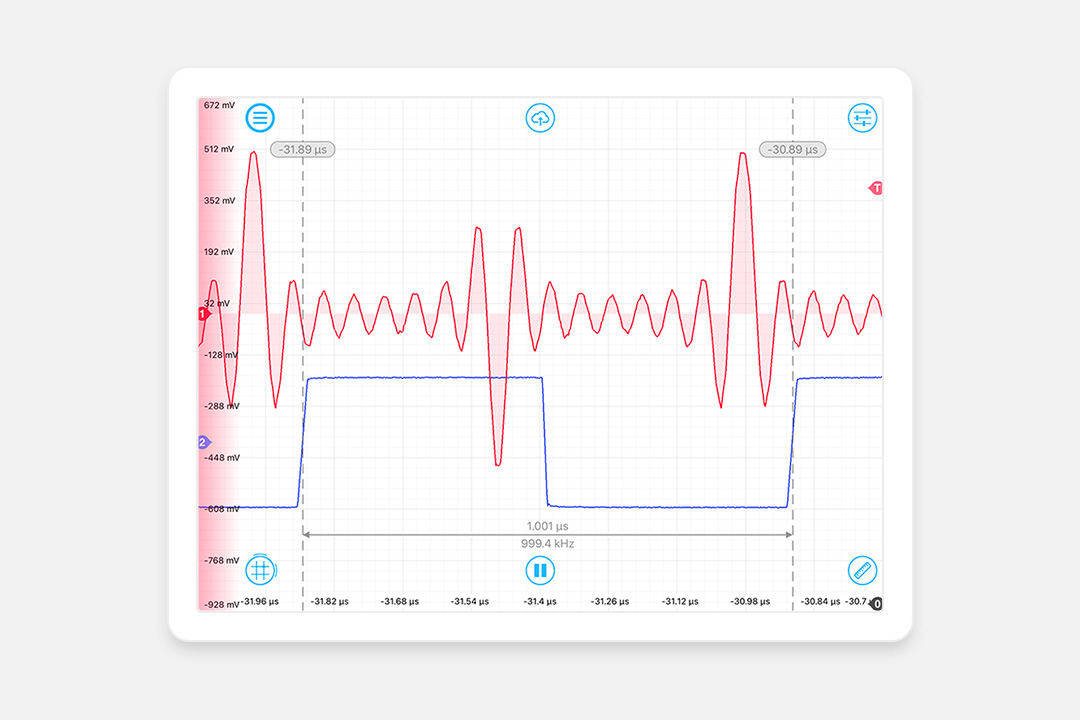
Arbitrary waveform generators are used to output specific stimulus signals for a device under test, such as detectors and communication devices. In this application note, we provide a tutorial on using Moku:Go’s Arbitrary Waveform Generator with MATLAB to generate two arbitrary waveforms with pulse and burst modulation. The MATLAB script and text file accompanying this…
-
Moku:Go’s I-V Curve Tracing
Moku:Go combines 10+ lab instruments in one high-performance device. This application note uses Moku:Go’s Oscilloscope and its integrated waveform generator to investigate the forward bias behavior of a diode. Moku:Go Moku:Go combines 10+ lab instruments in one high performance device, with 2 analog inputs, 2 analog outputs, 16 digital I/O pins and optional integrated power…
-
Overview of Butterworth filter lab
Moku:Go combines 10+ lab instruments in one high-performance device. This application note discusses a typical undergraduate electronics lab exercise and how it can be effectively conducted using Moku:Go and its Windows or macOS app. Moku:Go’s programmable power supplies power the integrated circuit and the analog inputs and outputs can stimulate and characterize the circuit behavior.…
-
Moku:Go’s Spectrum Analyzer
Moku:Go combines 10+ lab instruments in one high-performance device. This application note discusses Moku:Go’s Spectrum Analyzer and Waveform Generator and the advantages of a hybrid, swept signal spectrum analyzer. Moku:Go Moku:Go combines 10+ lab instruments in one high performance device complete with integrated power supplies. In this application note, we discuss the benefits of a…
-
Moku hardware and remote labs
Moku:Go combines 8 lab instruments in one high-performance device with Windows and macOS apps. This application note discusses the real-world deployment of Moku hardware in an undergraduate teaching laboratory and the resulting benefits to students. Moku:Go Moku:Go combines 8 lab instruments in one high-performance device complete with integrated power supplies on M1 and M2 models.…
-
Stimulated Raman Scattering Microscopy
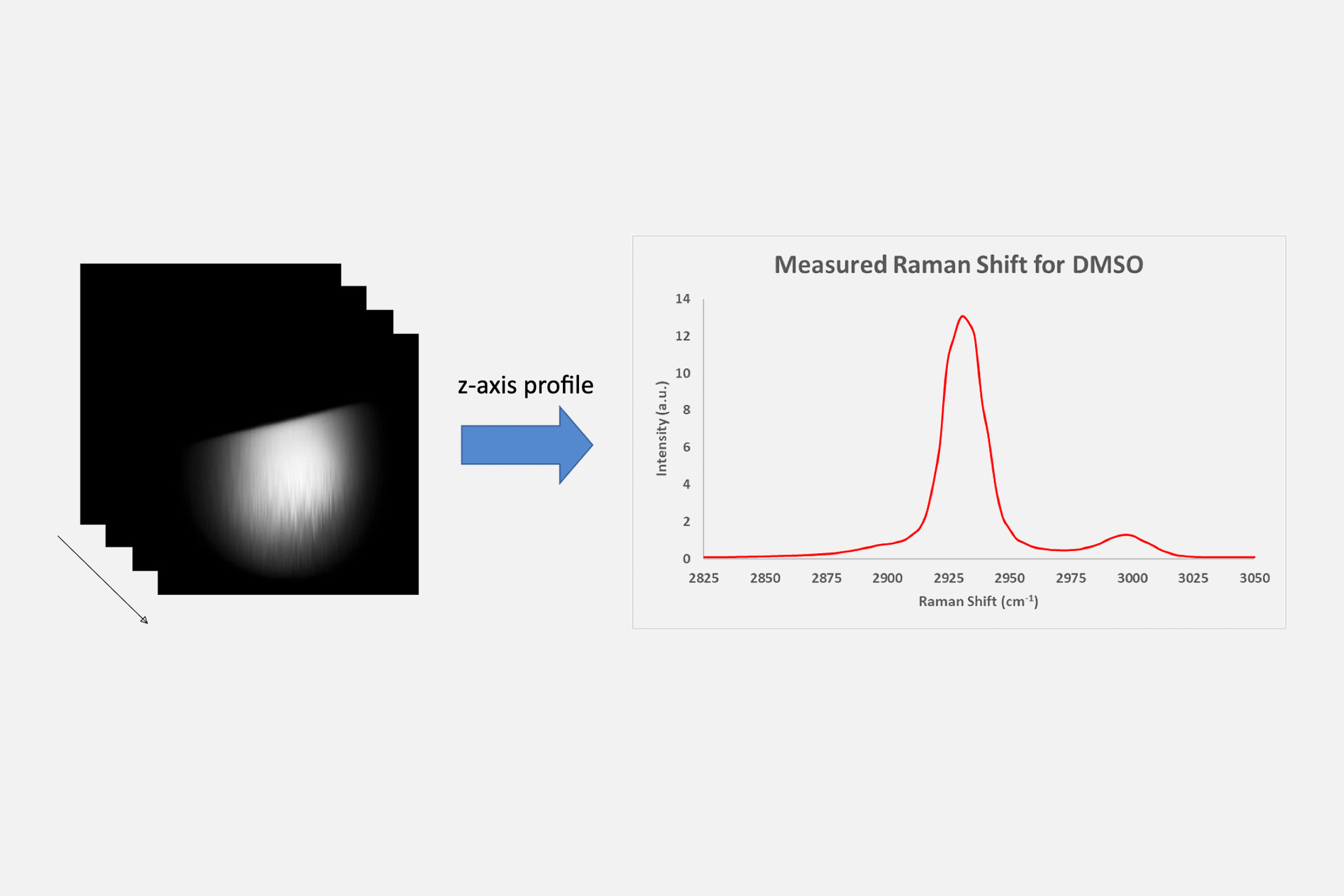
Raman effect was first discovered in the 1920s by C.V. Raman1, 2. It is a widely used spectroscopic method to determine the vibrational modes of molecules3, 4. Compared to other analytical chemistry methods, spectroscopic approaches provide high spatial resolution. No direct contact is required to obtain chemical information. The vibrational spectrum offers reasonable chemical specificity…
-

Capturing a high-speed mechanical impact using the Moku:Lab Data Logger
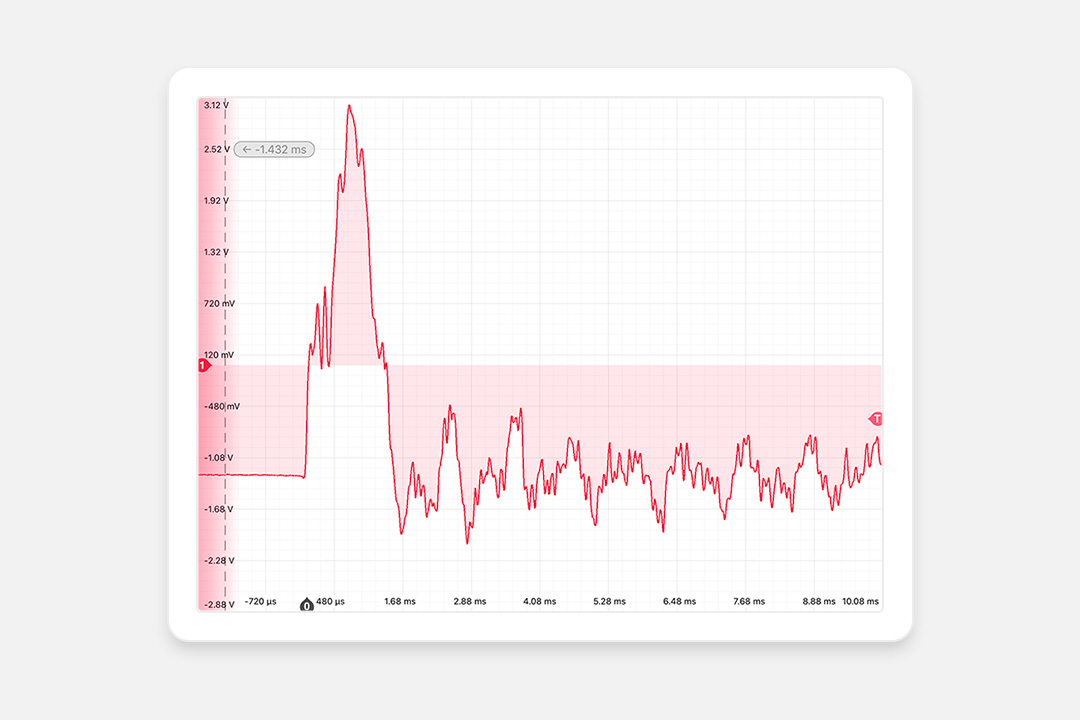
Updated April 24, 2023 In this application note we describe the use of the Moku Data Logger to capture a high-speed mechanical impact using a strain gauge. We are aiming to drop a steel ball onto an aluminum plate, measure the strain of this roughly 100 ms event, and observe any resulting mechanical oscillations. In…
-
Moku:Lab and MATLAB
In this application note we provide a tutorial using Moku:Lab’s Arbitrary Waveform Generator with MATLAB. Step-by-step instructions are detailed for deploying two simple waveforms from MATLAB directly to Moku:Lab. We use a second Moku:Lab running the Oscilloscope and Spectrum Analyzer instruments to confirm the output waveforms. A Lissajous curve example is then shown together with…