Your cart is currently empty!
Category: Application notes
-

Impedance measurements with Moku:Go – Part 2: Inductance
This application note presents an example and discussion of how to make accurate impedance measurements with a Moku:Go device. In Part 1, we explored the math of measuring resistance using voltage measurements from the software-defined Moku Frequency Response Analyzer. Now in Part 2, we’ll explore inductance measurements. Using the Moku Frequency Response Analyzer The Moku…
-

How to optimize PDH laser locking with the Moku:Pro Laser Lock Box
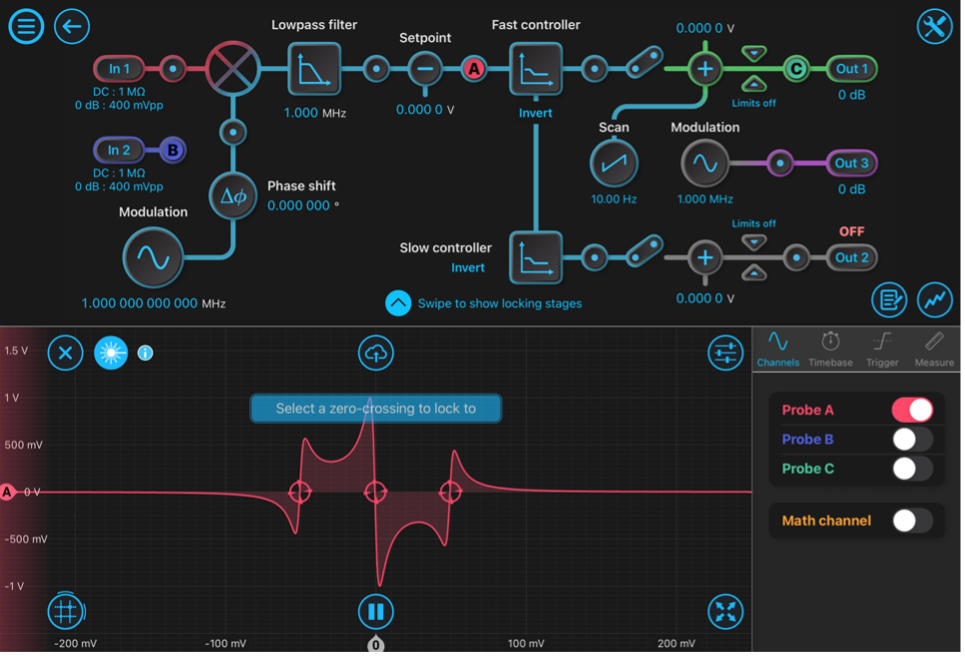
The Moku:Pro Laser Lock Box integrates multiple crucial electronic components of the Pound-Drever-Hall laser locking technique into one instrument, making the laser locking process easier than ever without compromising performance. This app note will cover the principles of PDH locking, outline the procedure for locking a laser to a high-finesse cavity using the Moku:Pro Laser…
-

Implementing a matched filter for radar and waveform triggering using the Moku:Pro FIR Filter Builder
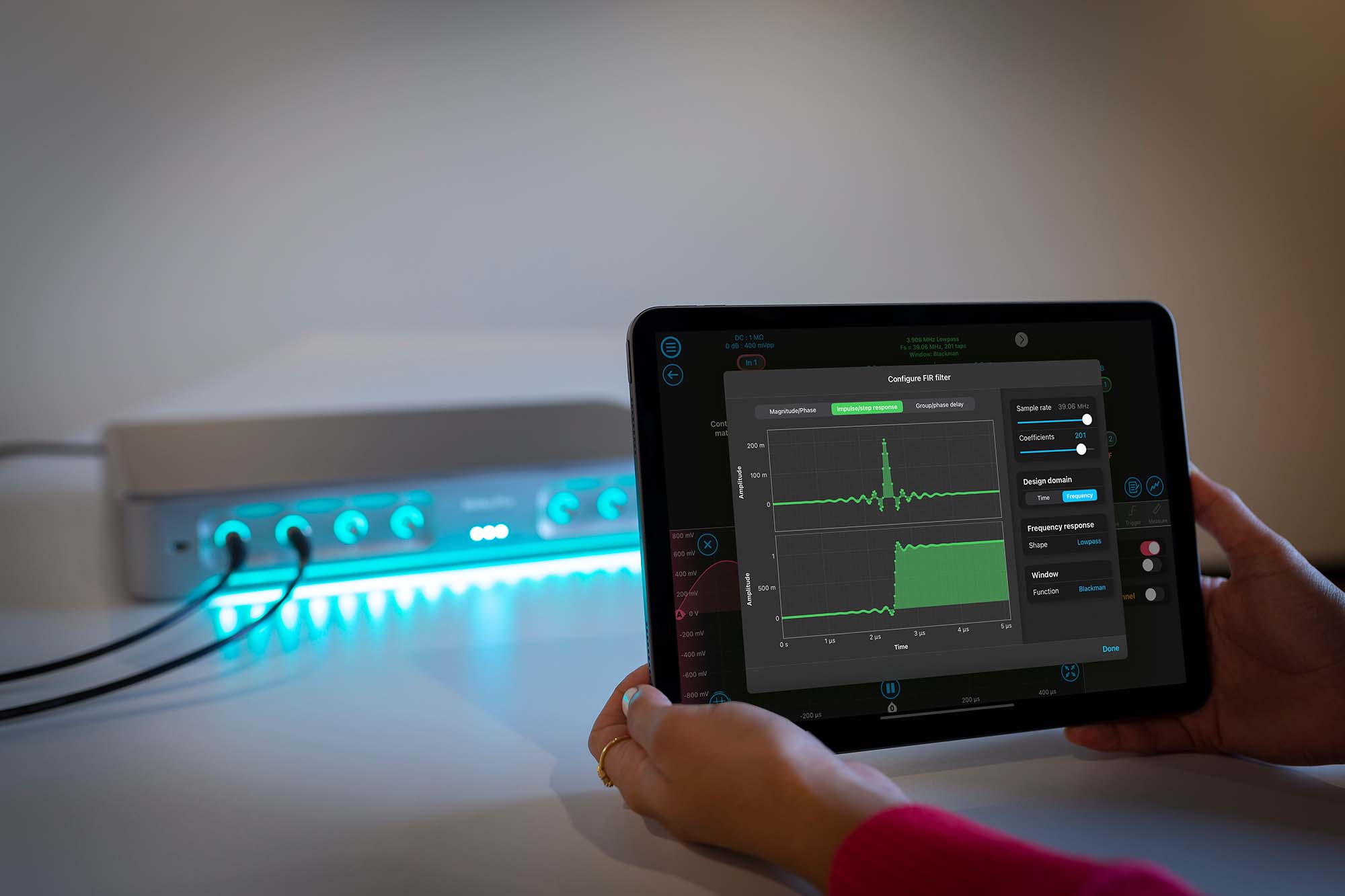
Accurate detection of signal presence in noisy channels is critical for many applications, from time-of-flight ranging methods like radar and LiDAR to security engineering and hardware penetration tests. The matched filter is the optimal filter design for presence and time-of-arrival detection of a known signal. This application note presents a demonstration of the effectiveness of…
-

Impedance measurements with Moku:Go – Part 1: Resistance
This application note presents an example of making impedance measurements using the Moku:Go device. Here in Part 1, we will explore the underlying mathematical principles of measuring resistance and its accuracy using the software-defined Moku Frequency Response Analyzer. In Part 2, we expand our analysis to include inductance. In Part 3, we will explore capacitance.…
-

Laser locking with closed-loop transfer function measurement
Multi-instrument Mode on Moku:Pro allows you to lock lasers to optical cavities with the Laser Lock Box while also measuring the Bode plots by using the Frequency Response Analyzer (FRA) with no additional test equipment or wiring. By injecting a disturbance into the error signal and measuring the transfer function using the FRA, you can check…
-

Impedance measurements with Moku:Lab – Part 2: Inductance
In this application note, we present an example and discussion of making accurate impedance measurements with Moku devices. In part one, we explored the math of measuring resistance using the power measurements of the Frequency Response Analyzer. In part two, we will explore inductance measurements. Frequency Response Analyzer The Moku Frequency Response Analyzer (FRA) drives…
-
Impedance measurements with Moku:Lab – Part 1: Resistance
In this application note, we present some examples of making accurate impedance measurements using Moku devices. In part one, we will explore the math of measuring resistance and the accuracy using the Frequency Response Analyzer. In part two, we expand to inductive measurements. Frequency Response Analyzer The Moku Frequency Response Analyzer (FRA) drives a swept…
-

Moku:Go Protocol Analyzer
The Moku:Go Logic Analyzer incorporates its own Protocol Analyzer, which contains three protocols: SPI, I2C, and UART. Moku:Go Moku:Go combines 13+ lab instruments in one high-performance device, with two analog inputs, two analog outputs, 16 digital I/O pins, and optional integrated power supplies. Updates to the Moku:Go Logic Analyzer The Protocol Analyzer is available through…
-

Reducing noise and transients with custom real-time digital filtering
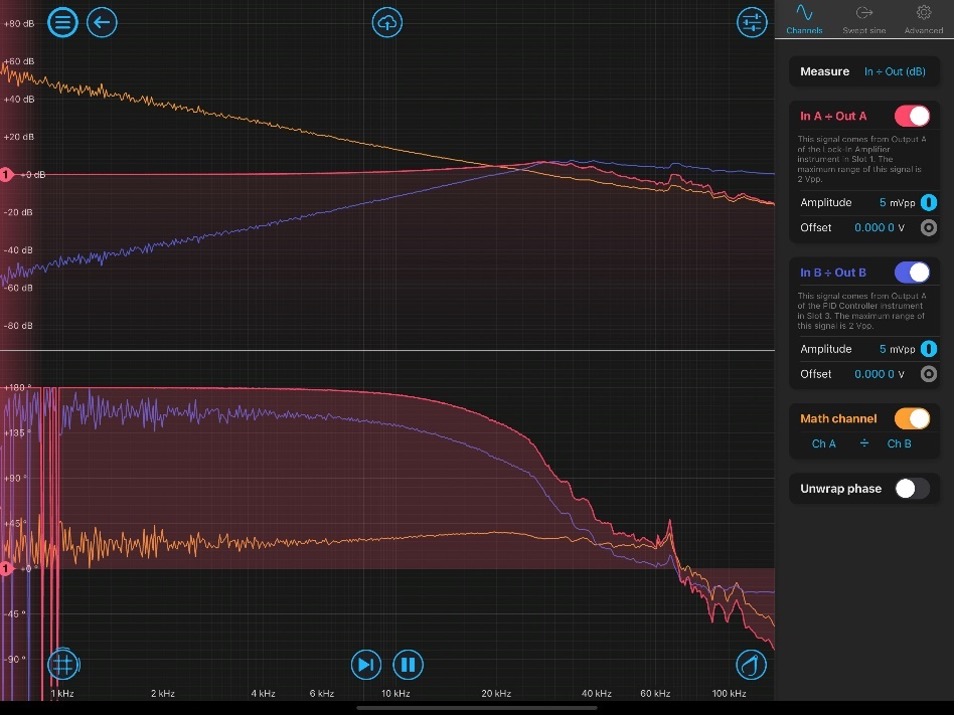
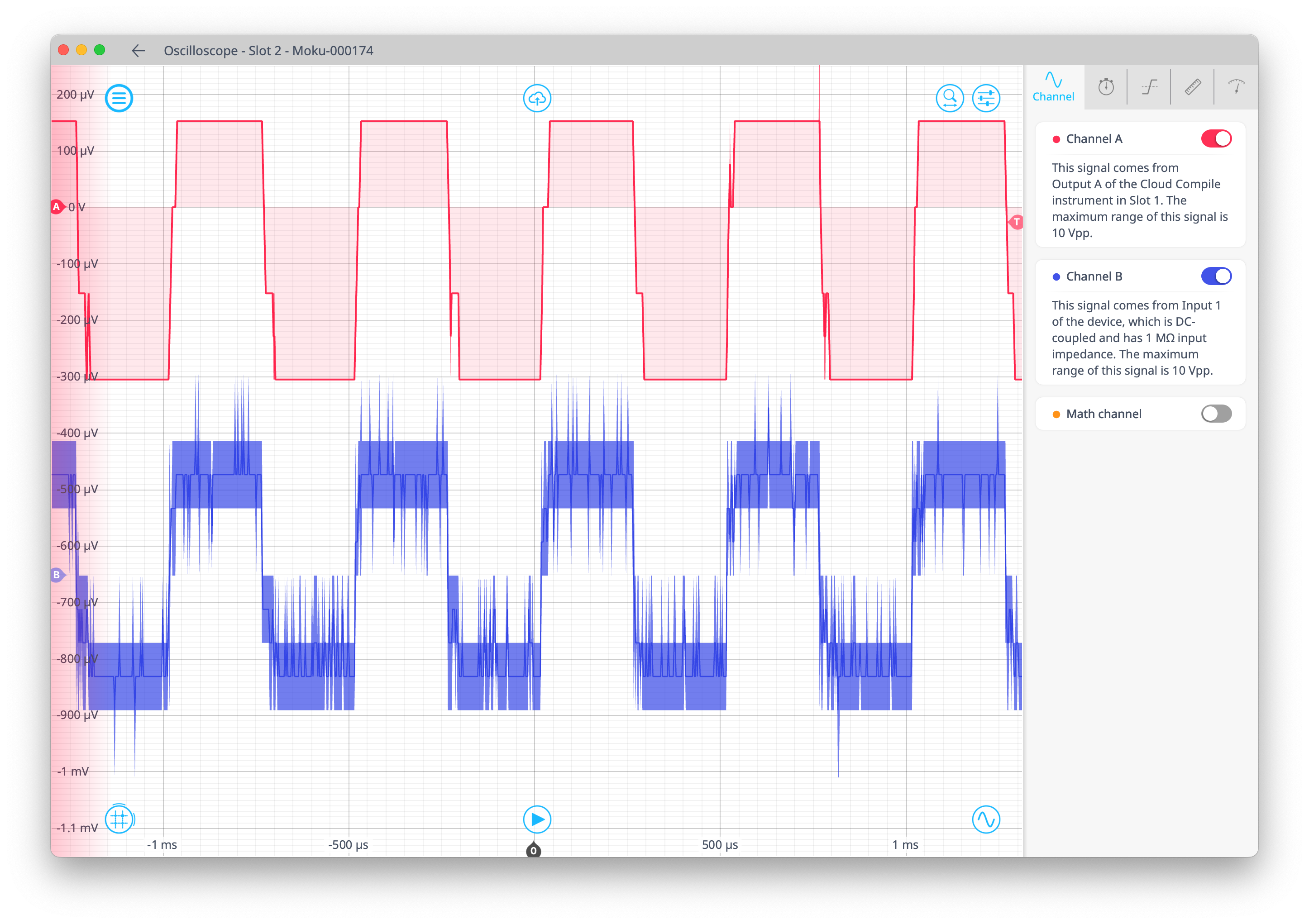
In this application note, we utilize Moku Cloud Compile and Multi-instrument Mode to explain the development of a commonly used moving average filter. We use both the Oscilloscope and Frequency Response Analyzer to examine this basic finite impulse response (FIR) filter. Then we develop, deploy, and examine a five-point median filter using Moku:Pro, Moku:Lab, or…