Your cart is currently empty!
Author: mmcardle
-

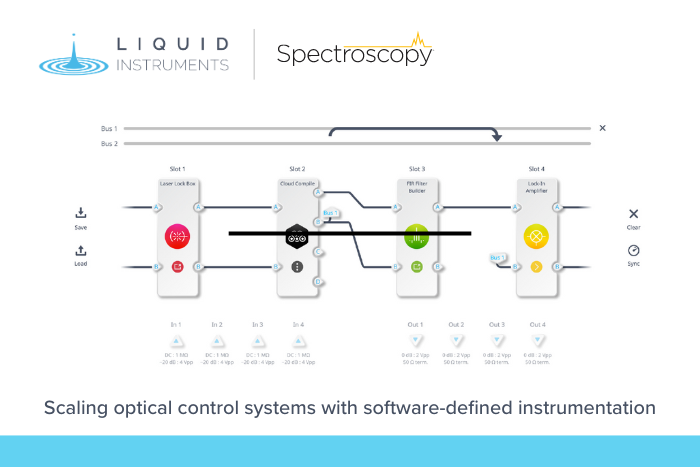
Streamlining optical control and characterization with software-defined instrumentation
Access at: https://stage.liquidinstruments.com/streamlining-optical-control-and-characterization-with-software-defined-instrumentation-ebook/ Ebook details Title: Streamlining optical control and characterization with software-defined instrumentation | Technical brief Date published: January 23, 2024
-

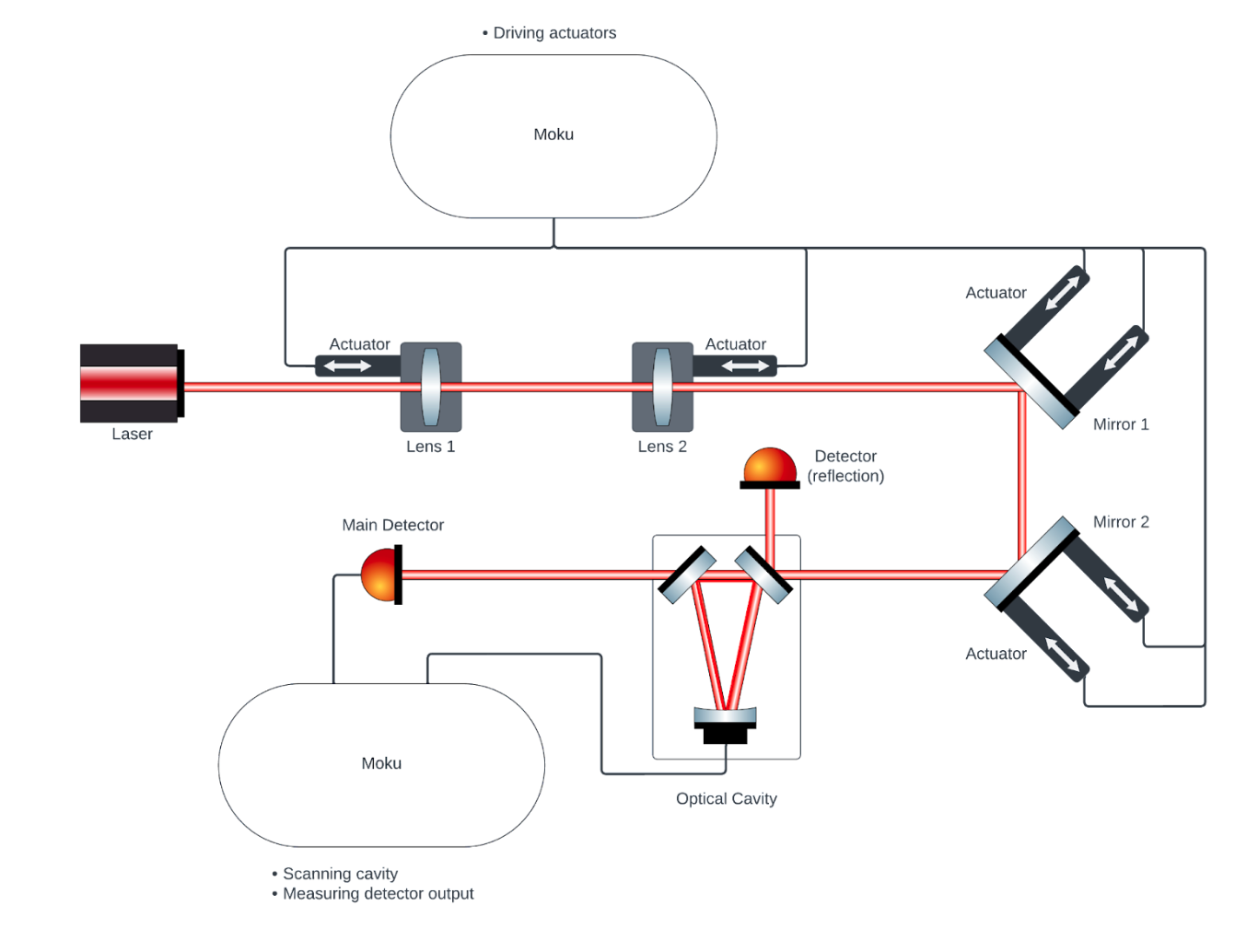
Auto-aligning optical cavity systems with Moku:Go
Introduction Optical ring cavities allow researchers to filter incoming light by transmitting only the selected modes. This technique is useful when applications such as optical interferometry and spectroscopy require thoroughly conditioned laser beams. Researchers often choose the lowest-order mode — Gaussian mode — as the objective so the resulting beam has a Gaussian profile. Successful…
-

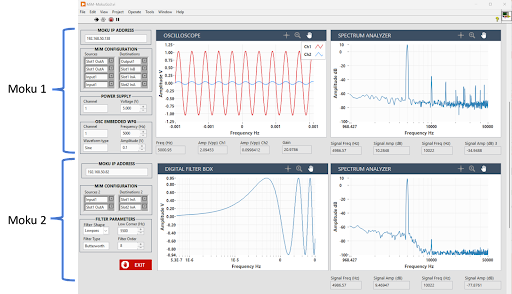
Configuring multiple Moku devices with a single LabVIEW program
Device characterization and validation often require more than one instrument to fully qualify your design. You may need an oscilloscope, spectrum analyzer, digital filters, and other instruments to verify the device or component. While flexible, FPGA-based solutions like Moku can solve this challenge by consolidating 13+ software-defined instruments into a single device, you may need…
-

Advancing Fourier transform ultrafast spectroscopy with Moku:Pro
Introduction Fourier transform ultrafast spectroscopy (FTUS) is a powerful technique that has revolutionized the way scientists capture and analyze spectra with exceptional speed and precision. By employing the principles of Fourier transform, FTUS efficiently dissects intricate signals into their frequency components by employing an interference approach with a reference signal. This method allows for the…
-

Surprise! Triggered data logging start, iPad support for Moku:Go, and CAN protocol are now available for Moku devices
Several Moku software upgrades are launching today — giving you new capabilities just in time for the new year! A few weeks ago, we dropped our biggest software upgrade ever with Moku Version 3.1. Multi-instrument Mode gained multi-window support and we brought a new instrument, the Logic Analyzer, to Moku:Pro and Moku:Lab. But with more…
-

Driving a new wave of cell sorting innovation at NanoCellect with Moku:Lab
Introduction NanoCellect Biomedical specializes in the development of innovative cell analysis and sorting solutions. Leveraging its proprietary microfluidic technology, NanoCellect is revolutionizing the field of cell biology by providing researchers and clinicians with user-friendly, high-throughput options for cell analysis, sorting, and isolation. By empowering researchers with reliable and flexible tools, NanoCellect is driving advancements in…
-

Mastering Moku, episode 2: Tips and tricks for smarter testing
Access at: webinar-registration-mastering-moku-episode-2-tips-and-tricks-for-smarter-testing Webinar details Title: Mastering Moku, episode 2: Tips and tricks for smarter testing Date recorded: October 31, 2023 Speaker: Jessica Patterson
-
Multi-instrument Mode just got its biggest upgrade ever, plus a new instrument now available for Moku:Pro and Moku:Lab
New upgrades are now available for Moku:Pro, Moku:Lab, and Moku:Go devices! Our latest software release has significantly increased the capabilities of Multi-instrument Mode with distinct windows that allow simultaneous interactivity with multiple software-defined instruments. Moku Version 3.1 also brings the Logic Analyzer to Moku:Pro and Moku:Lab, standardizing the number of available instruments across all Moku…
-

Simplifying FPGA code development: How ChatGPT is changing the game
Hardware description languages (HDLs) such as VHDL are notoriously difficult to learn. Despite their complexity, these powerful tools are necessary to execute custom algorithms using field-programmable gate arrays (FPGAs), such as with all-in-one Moku test devices from Liquid Instruments. Other languages like Python are supported by a wealth of easily accessible information that make them…