Your cart is currently empty!
Author: joel
-

-
Moku:Pro’s Phasemeter
Moku:Pro’s Phasemeter measures phase (relative to a reference clock) of up to four input signals with better than 6 μradian precision from 1 kHz up to 300 MHz. Based on a digitally implemented phase-locked loop architecture, Moku:Pro’s Phasemeter provides exceptional dynamic range, zero deadtime, and measurement precision that exceeds the performance of conventional lock-in amplifiers…
-

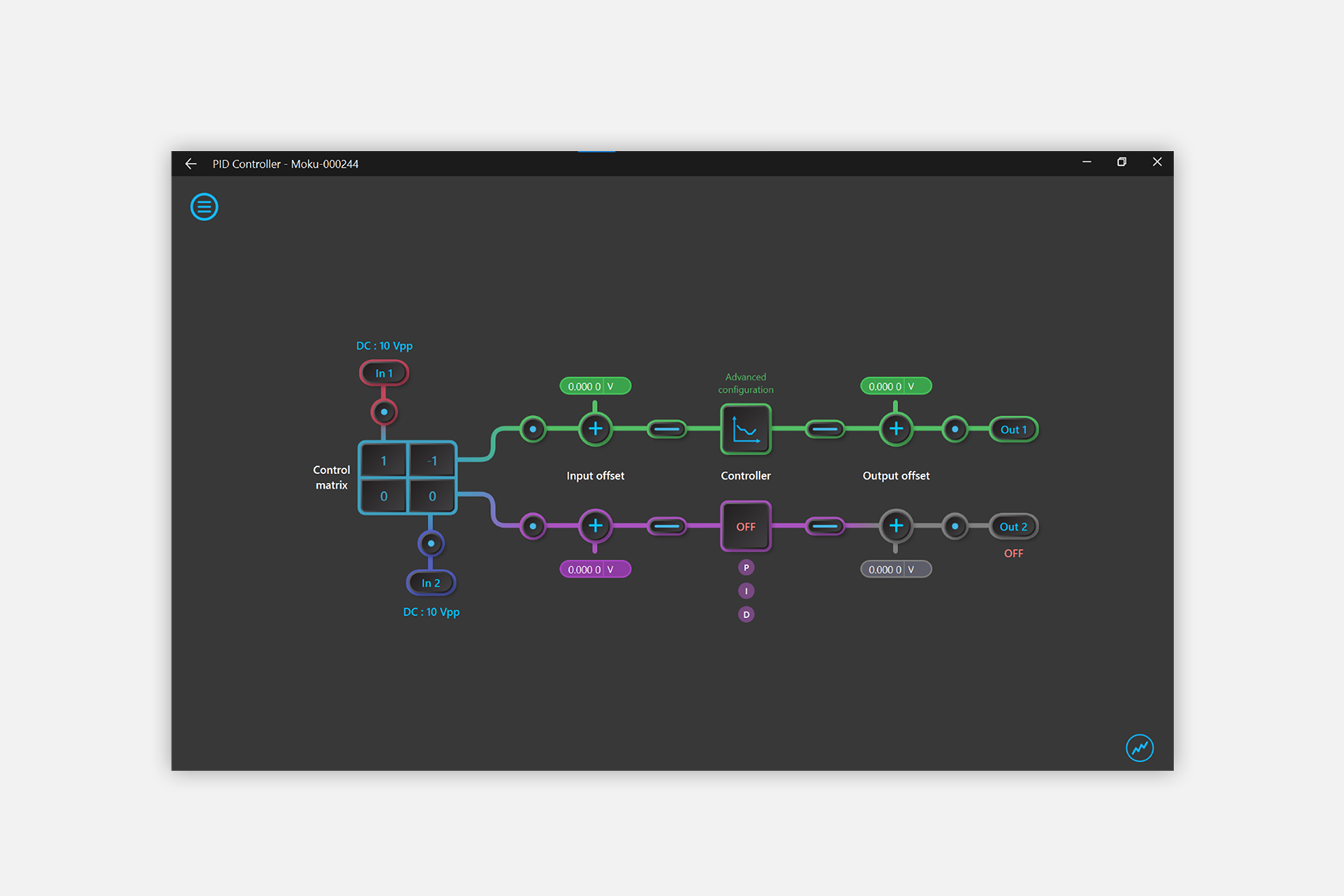
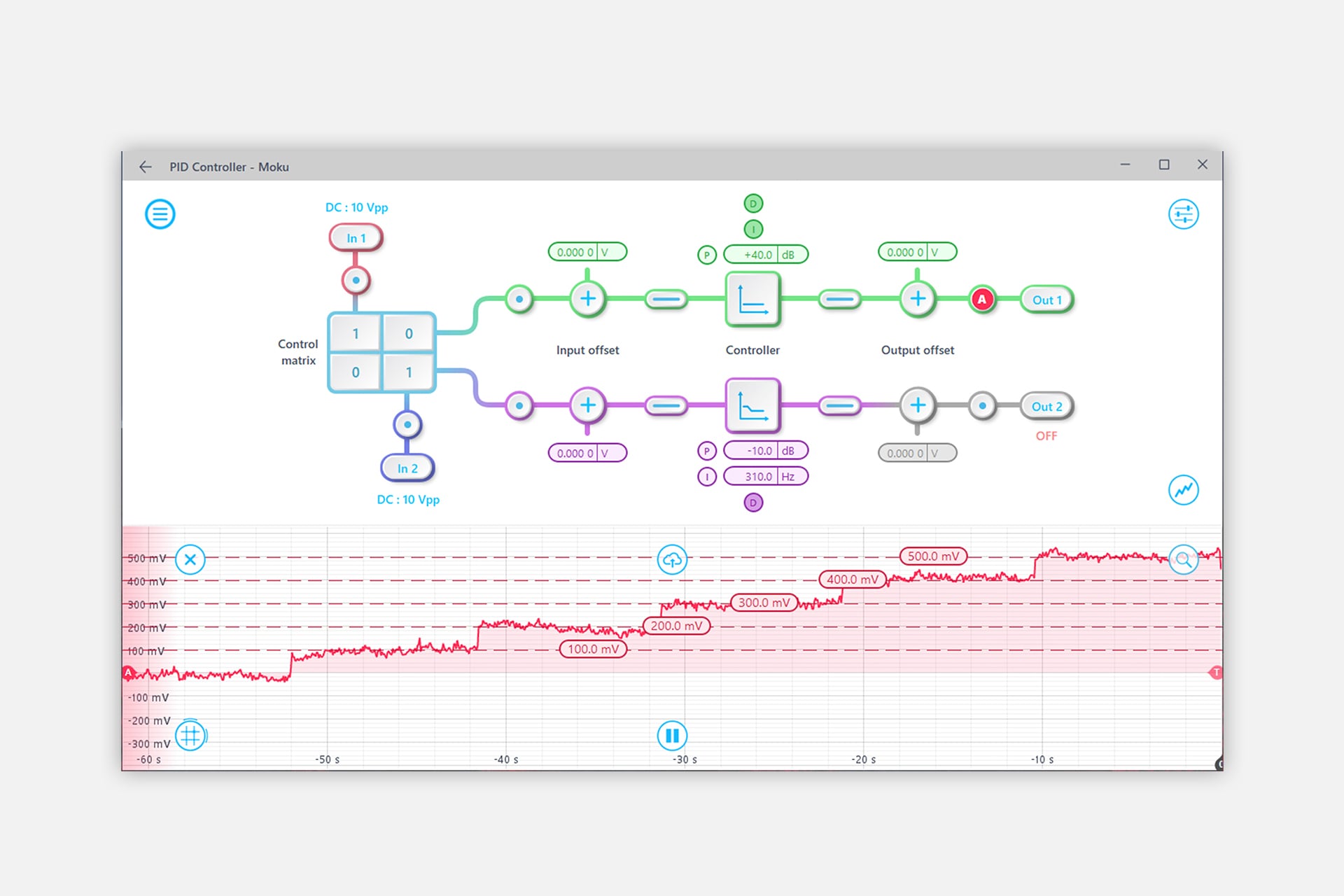
Open Loop Tuning lab using Moku:Go’s PID Controller
Moku:Go combines 10+ lab instruments in one high performance device. This application note uses Moku:Go’s PID Controller, Oscilloscope, and Programmable Power Supplies to provide a visually engaging way of learning various tuning methods for PID controllers. Moku:Go Moku:Go combines 10+ lab instruments in one high performance device, with 2 analog inputs, 2 analog outputs,…
-
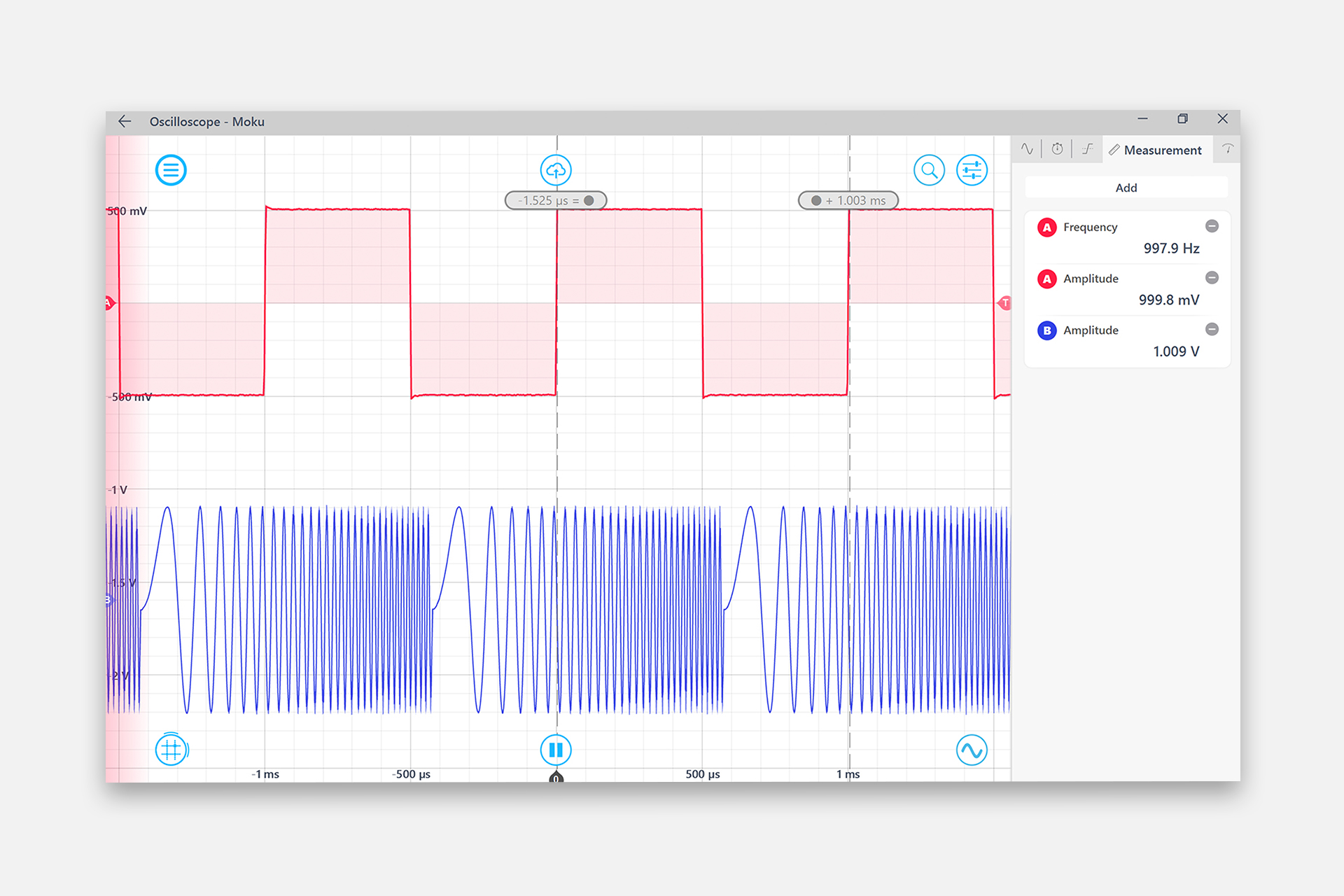
Sampling Theorem
Signal digitization is an essential step to enable digital signal processing (DSP). It converts an analog signal to discrete-time binary numbers and allows the signal to be processed with digital logic devices, such as CPUs, application-specific integrated circuits (ASIC), and field-programmable gate arrays (FPGA). To ensure the conversion process retains the maximum signal fidelity, the…
-
Bit Growth via Oversampling
Bit resolution and sampling rate are two of the most important characteristics of an analog-to-digital converter (ADC). With a higher bit resolution, the input signal can be digitized with a higher resolution and lower quantization noise. Therefore, it helps improve the overall outcome of the entire digital signal processing (DSP) workflow. Most ADCs are designed…
-
Moku:Go’s Arbitrary Waveform Generator
Arbitrary waveform generators are used to output specific stimulus signals for a device under test, such as detectors and communication devices. In this application note, we provide a tutorial on using Moku:Go’s Arbitrary Waveform Generator with MATLAB to generate two arbitrary waveforms with pulse and burst modulation. The MATLAB script and text file accompanying this…
-
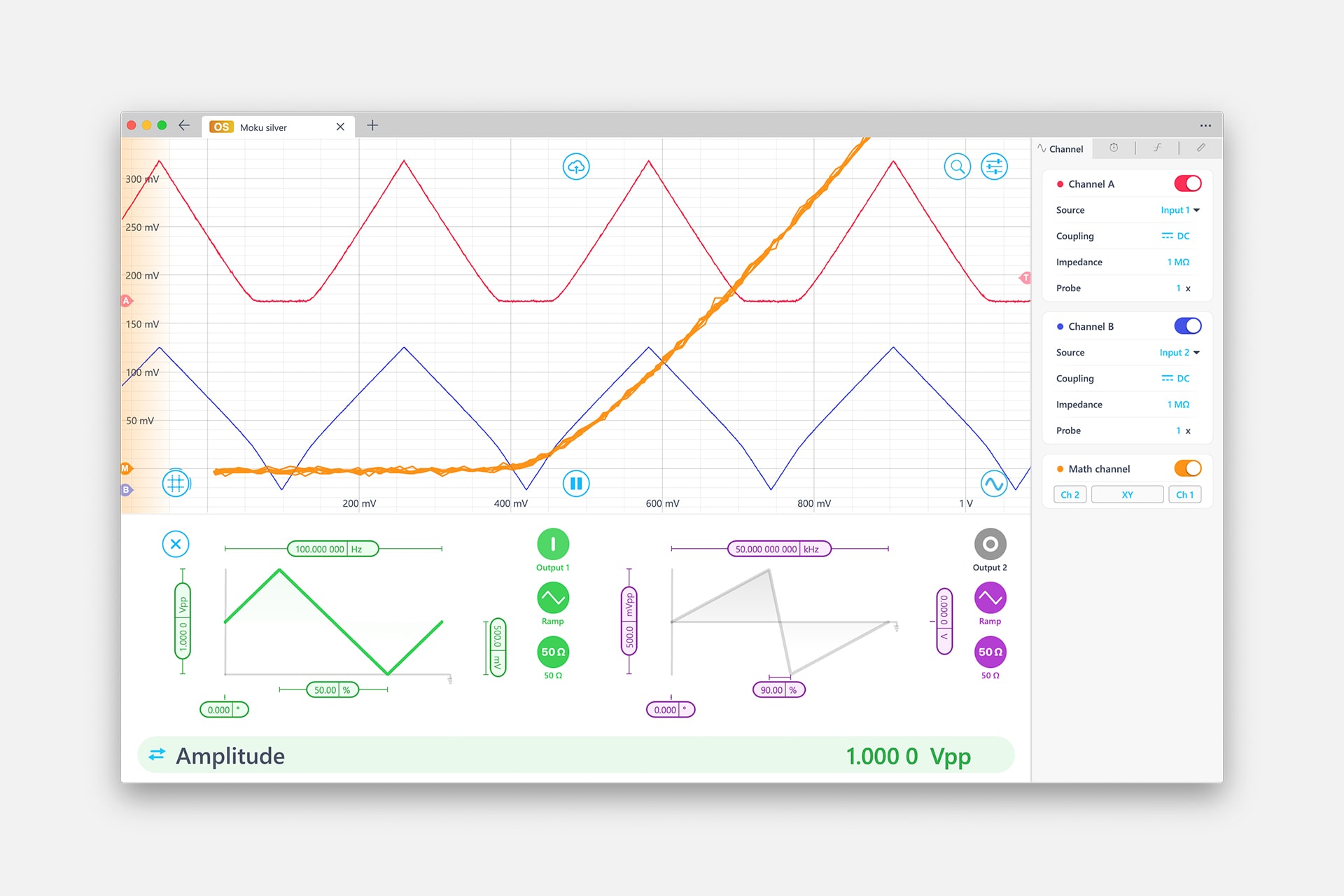
Moku:Go’s I-V Curve Tracing
Moku:Go combines 10+ lab instruments in one high-performance device. This application note uses Moku:Go’s Oscilloscope and its integrated waveform generator to investigate the forward bias behavior of a diode. Moku:Go Moku:Go combines 10+ lab instruments in one high performance device, with 2 analog inputs, 2 analog outputs, 16 digital I/O pins and optional integrated power…
-
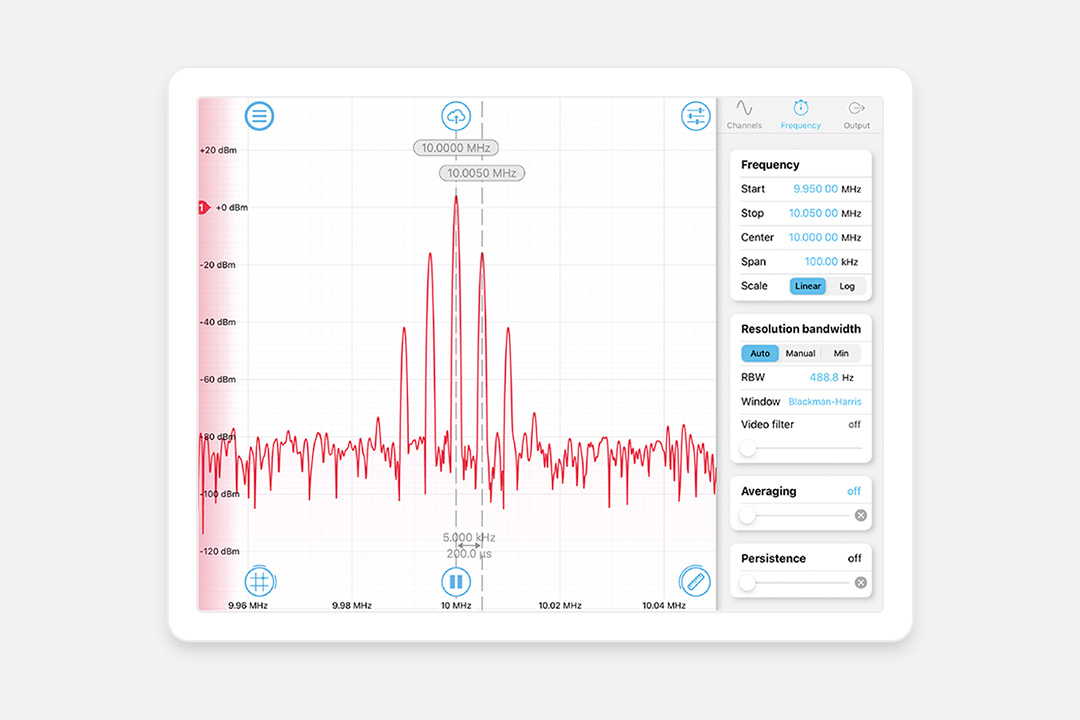
Introduction to the Moku:Lab Spectrum Analyzer
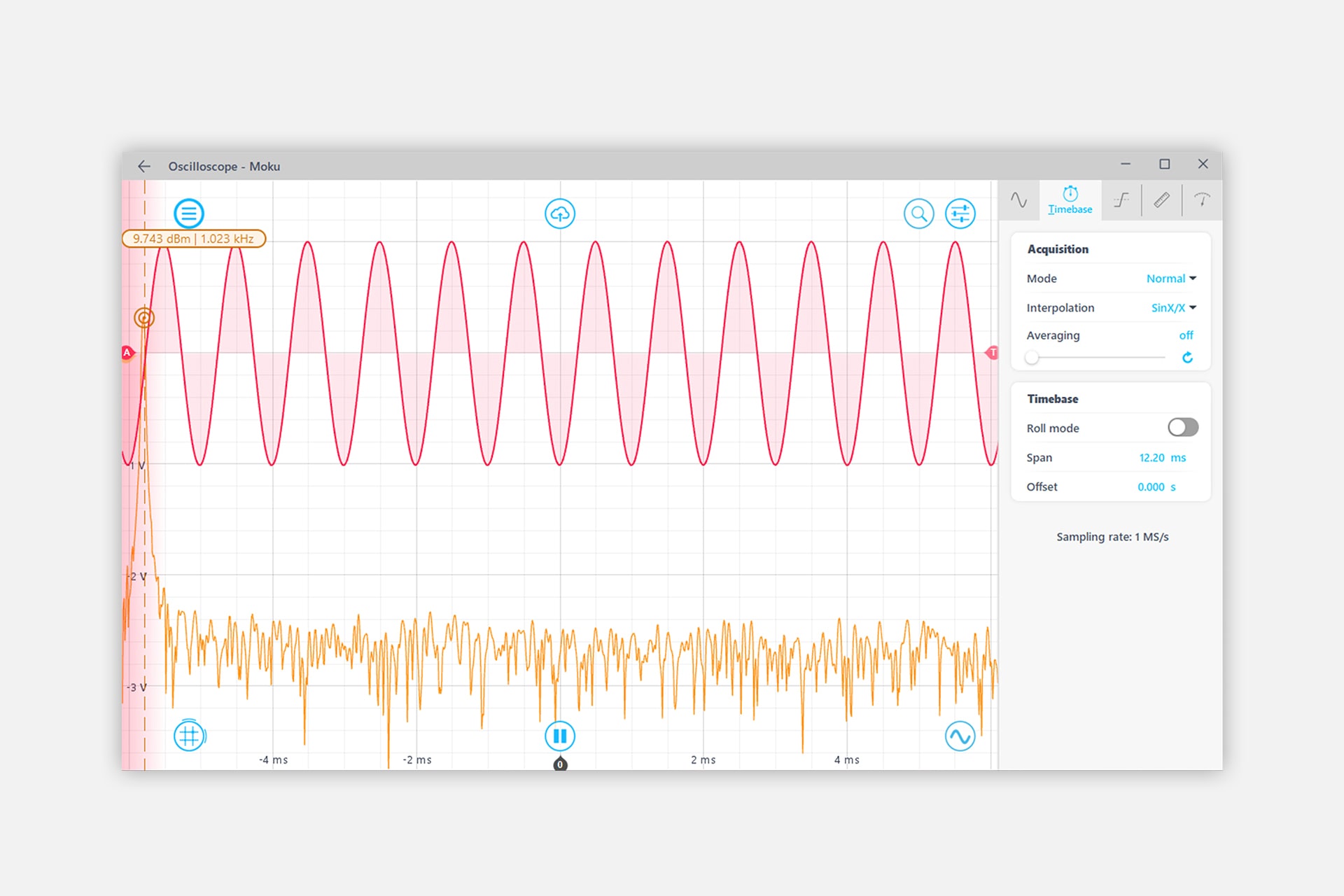
Updated April 24, 2023. Spectrum analyzers are essential test and measurement instruments in the lab. They are used to display and analyze signals in the frequency domain. Compared to the Fast Fourier Transform (FFT) function available in some oscilloscopes, frequency-swept spectrum analyzers typically provide better spectral resolution while maintaining a large frequency span. However, spectrum…
-
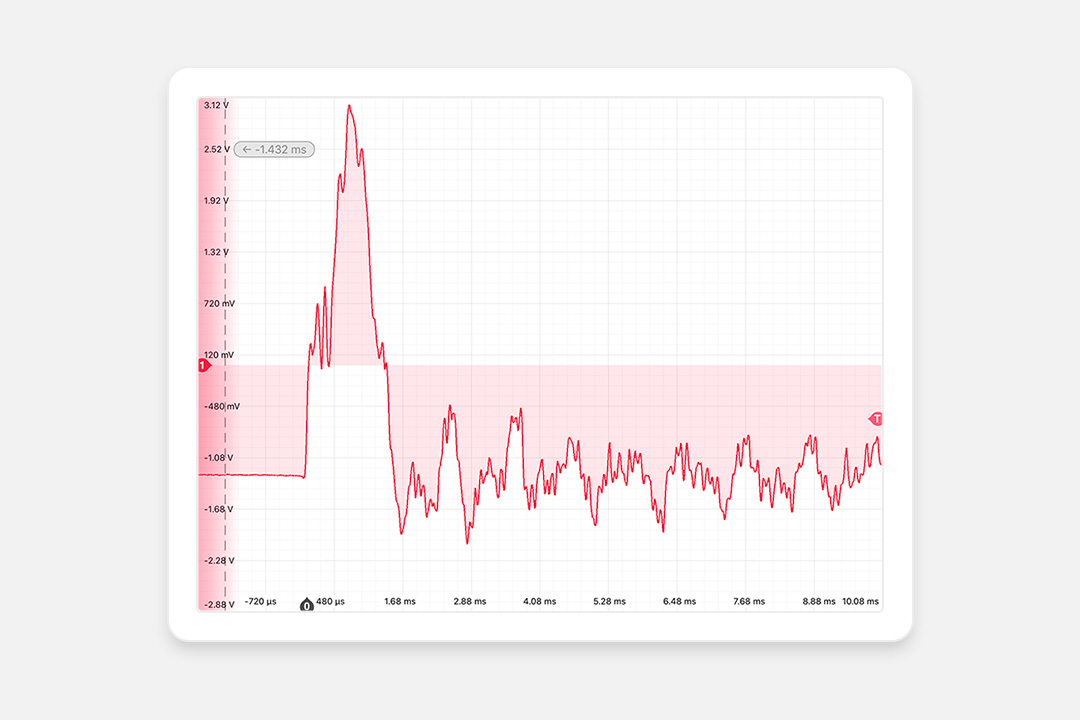
Capturing a high-speed mechanical impact using the Moku:Lab Data Logger
Updated April 24, 2023 In this application note we describe the use of the Moku Data Logger to capture a high-speed mechanical impact using a strain gauge. We are aiming to drop a steel ball onto an aluminum plate, measure the strain of this roughly 100 ms event, and observe any resulting mechanical oscillations. In…